You can't visit Budapest without trying the baths. In a city that is built on a thin layer of earth above 118 thermal springs that power the city's bath houses, taking the baths is one of the treats of your visit, as well as a chance to experience the local culture.
Of the 15 public thermal baths in the city, we decided to "bathe" at the Széchenyi baths, the largest in the city as well as the largest spa in Europe.

Its thermal springs were first discovered in 1879, and the stunning architectural structure that holds the bath house was built in 1913.
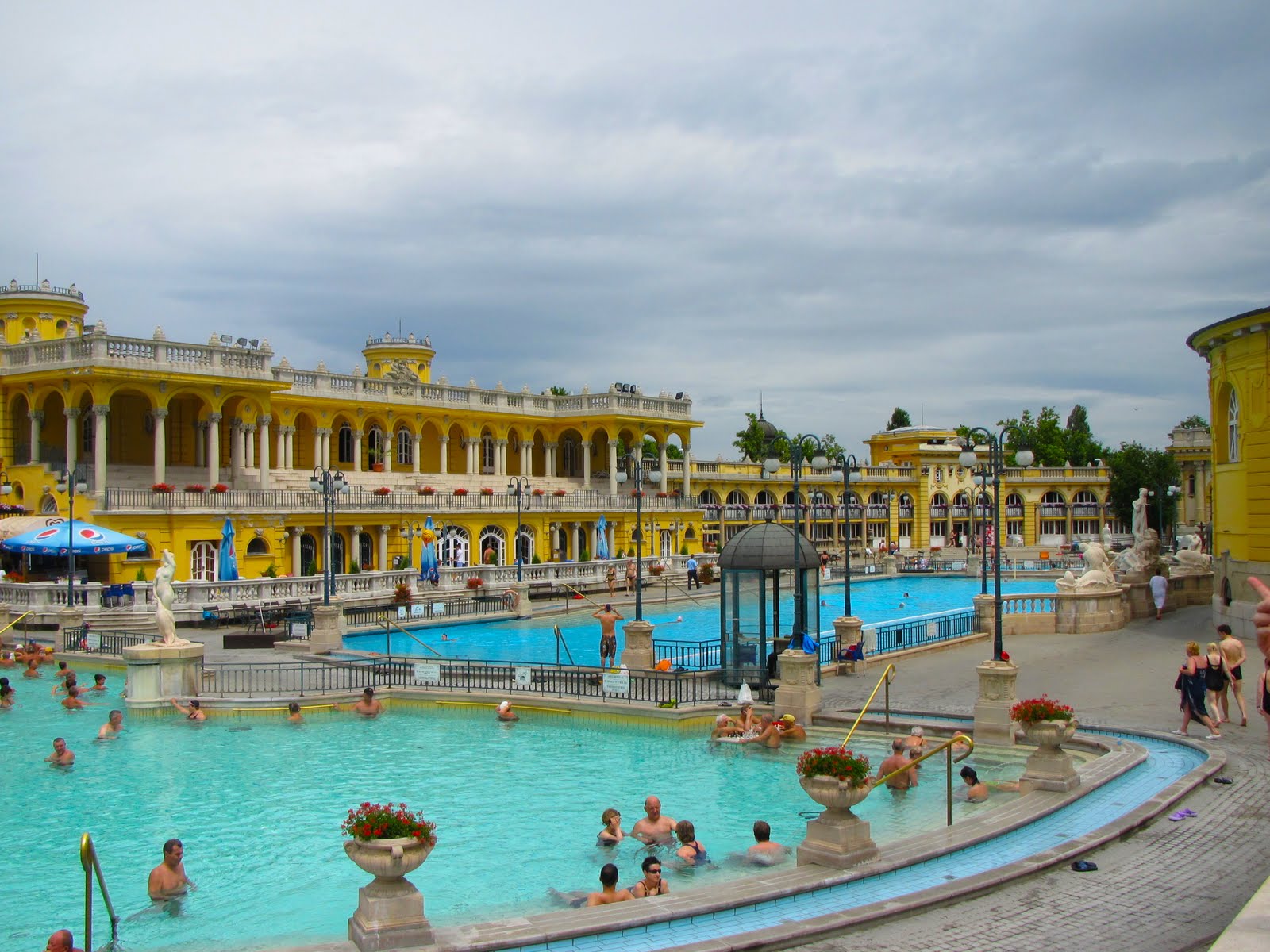
Known for its vast bath complex, there are three outdoor pools open year round. Two of them are hot soaking pools with temperatures of 30º and 38º (86º F and 100.4º)

and one is a swimming pool with a swimming tube--a whirling corridor that is extremely popular.

Budapest's thermal waters were first enjoyed by the Romans as early as the second century, but it was later during the Turkish occupation of the city in the 16th century that the bath culture began to flourish.

Indoors we found saunas and 15 pools of varying temperatures

from very warm to very cold

where we enjoyed taking the baths with the locals. In addition to the relaxation of spending a day in the bath, the minerals in the waters are very therapeutic and felt marvelous after all the walking we had been doing to cover all points of this beautiful city.

And if you get tired of all that soaking, you just might enjoy an afternoon game of chess like these local friends were doing.
Checkmate!




 Posts
Posts