Sunday, July 17, 2011

L'Isle Sur la Sorgue


Our first day in Provence found us driving towards the island city of Isle-sur-la-Sorgue.


Surrounded by the River Sorgue on all sides,


the city oozes charm. Mossy wooden paddles from one of  several water wheels in town are still turning, and in former times helped keep the silk, woolen and paper industries going.


We made a point to visit Isle-sur-la-Sorgue on Thursday, its market day.


Vendors spilled out in every direction, along the river and around the Romanesque church


selling beautiful dish cloths


and table cloths


that were every bit as colorful as the fruit in the nearby stands.


Donkey sausage, anyone?


Flowers for arranging,


and for planting.


Cheeses for every palate,


or lavender by the scoop,


as well as the ever popular Savon de Marseille,


and greens for dinner. Just a few of the multitude of choices.


BUT, I must come back someday soon, because what really puts Isle-sur-la-Sorgue on the map is its popularity as an antiquing town. With over 300 permanent antique dealers and many more who flood the town each Sunday for its weekly antique market, it is the largest concentration of antique dealers outside of Paris.
Regretfully, our schedule did not allow a Sunday visit, and the antique shops are open only on the weekends, so I've every goal for a return visit. It's hard to imagine it being any more fun than the excitement of the Thursday market day when we visited, but I'll check it out....
someday,
 and maybe we can stay at our little farmhouse again, and a group of us can hook up together to share the fun.

Friday, July 15, 2011

Dreaming of Provence


Yes, my homes are in London and Texas, but it's truly France that has my ♥. Ever since I dreamed of far away places in my junior high French class while learning my colors and fruits, I've had a passion for this beautiful country. So it's no surprise that every chance we get, we head that direction.

This time we took the Eurostar from London to Paris, and then the TGV, France's speed train to Avignon in the south of France, where we rented a car and struck off for our French home for the week.


We finally arrived at Les Olivettes, a bastide or farmhouse  which has been converted into a guest house with 5 cute Provençal apartments. You can read more of the details here.


Take a peek as we go inside


where you'll see the common gathering area we shared with a family from the States and another family from Brazil. Each of us had our own apartments with a sitting area, bath, kitchen and bedroom.
Wouldn't it be fun for a group of us to go back and rent out the whole place just for ourselves?


The farmhouse is situated just outside of the delightful village of Lourmarin, which was a 5 minute walk away. The views from the house of the village


and of the chateau there at Lourmarin almost made you never want to leave the house to venture any further. 


Surrounding the house were lovely lavender filled gardens


accented with bright flowers


and surrounded by trees.


We often had our breakfast or our dinner out on the terrace looking over the Luberon valley, where the air was its freshest and we could hear the harmony of the cicadas.


Before leaving, we bought some olive oil from our hosts, Joseph and Elizabeth DeLiso, that had been pressed from trees on the property. Joseph and Elizabeth were so helpful to all of their guests as we'd make our plans each day. Their home was just minutes away in the village.


The pool was so inviting, it was hard to leave it behind each morning as we would strike out on the day's adventure.


Come evening,


the sunsets took your breath away


with promise of a new day and more adventures ahead.


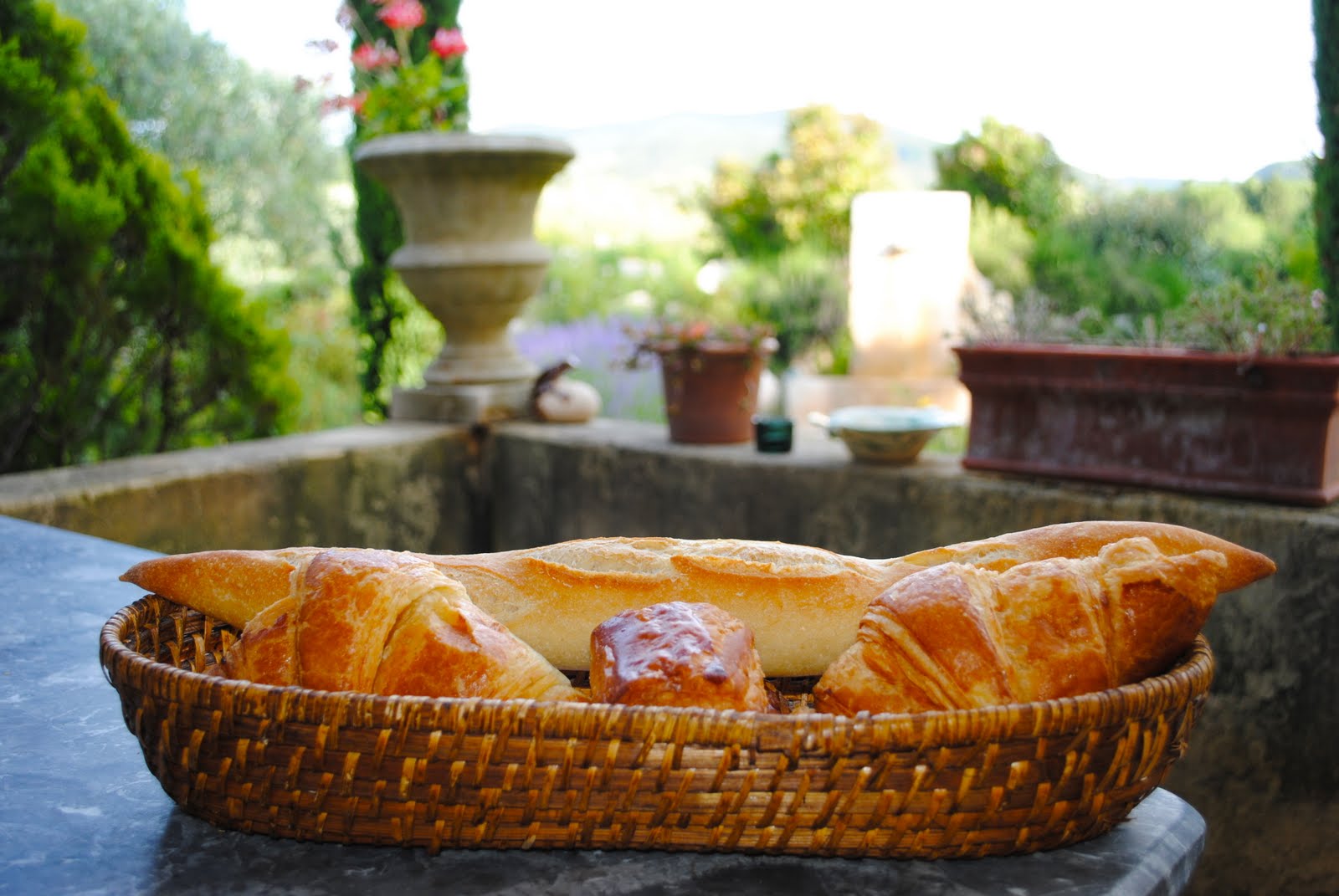
Each morning, we would find a bread basket just outside our doors--a kick-off and sustenance for the day ahead. First adventure on our list, the town of Isle-sur-la-Sorgue on a market day.

I can't wait to share photos and stories from there as well as the other towns we explored while on our Provence get-away. Hope you'll come back for the tour!

Tuesday, July 12, 2011

Finding Faith in Budapest


As you travel, you never know where you will find stories of faith that will amaze you. Such was the case in Budapest. Hungary is predominantly a Roman Catholic country, and the largest church in Budapest is an amazing structure with an interesting history. St. Stephen's Basilica, named after the first king of Hungary who converted the Hungarians to Christianity, holds 8500 people.


Started in 1851, the church, built in a Neo-classical style, took over 5 decades to build. The dome of the church collapsed in 1868 and the church had to be rebuilt almost from scratch, but when completed it was definitely a stunning masterpiece.


The most sacred treasure of the church is the mummified right fist of St. Stephen which is on display in a side chapel in an ornate glass reliquary.


One of the most moving parts of our trip to Budapest was the time we spent in the Jewish Quarter, which has seen a tragic history, especially during the Holocaust period of this last century. Our tour started in the Dohány Street Synagogue, which is the second largest synagogue in the world,  just behind Temple Israel in New York City. Today, the Jewish community stands strong, with around 100,000 Jews calling Budapest home. The Quarter is home to 20 synagogues and prayer houses, schools, restaurants, and  a hospital.


The Dohány synagogue seats 3000 people and was built in 1859.


The wives, mothers and daughters assemble on the balcony level so that the men can worship without distraction.


At the beginning of WW II, some 240,000 Jews made their home in this area with 125 active synagogues, but all that was to change, when in 1944, the Germans installed a Hungarian Fascist party, the Arrow Cross Party, who set up a reign of terror. Over half of the Budapest Jews were lost in the last year of the war.


In the Garden of Remembrance, some 2281 people are buried in 24 mass graves right beside the synagogue, even though this was against Jewish law to be buried so close, but there was no other option at the time. The synagogue served as a detention center for many. As many as 20,000 Jews met their death when they were forced to march to the edge of the Danube River, and then shot and thrown into the river. Tens of thousands were assembled to go on death marches to concentration camps. Thousands died on the march, either from being shot or from starvation.


The remaining Jews left behind were gathered into an area called the Jewish Ghetto and enclosed by makeshift walls to contain them, where they suffered horrible conditions, lack of any medical care, insufficient food and frigid winter weather. 100, 000 people lived in these appalling conditions until liberated by the Soviets in January of 1945.


In the gardens behind the synagogue stands a metal weeping willow tree, a memorial to the 600,000 Hungarian Jews killed at this time. American actor, Tony Curtis, of Hungarian-Jewish descent, founded the Emanuel Foundation which restores Hungarian synagogues, and their group erected this memorial. The silver and stainless steel sculpture also represents an upside down menorah.


The names of victims are engraved on each of the leaves and remain as a chilling reminder of how wrong things can go when a society goes so far astray.
We stood in silence and respect as the truth of the story made its way into our hearts. The Hebrew inscription on the black granite archway sums up their loss, 
"Is there a bigger pain than mine?"

A sober and  moving memorial to so many lives wasted.

Sunday, July 10, 2011

A Hot Bath, Anyone?


You can't visit Budapest without trying the baths. In a city that is built on a thin layer of earth above 118 thermal springs that power the city's bath houses, taking the baths is one of the treats of your visit, as well as a chance to experience the local culture.

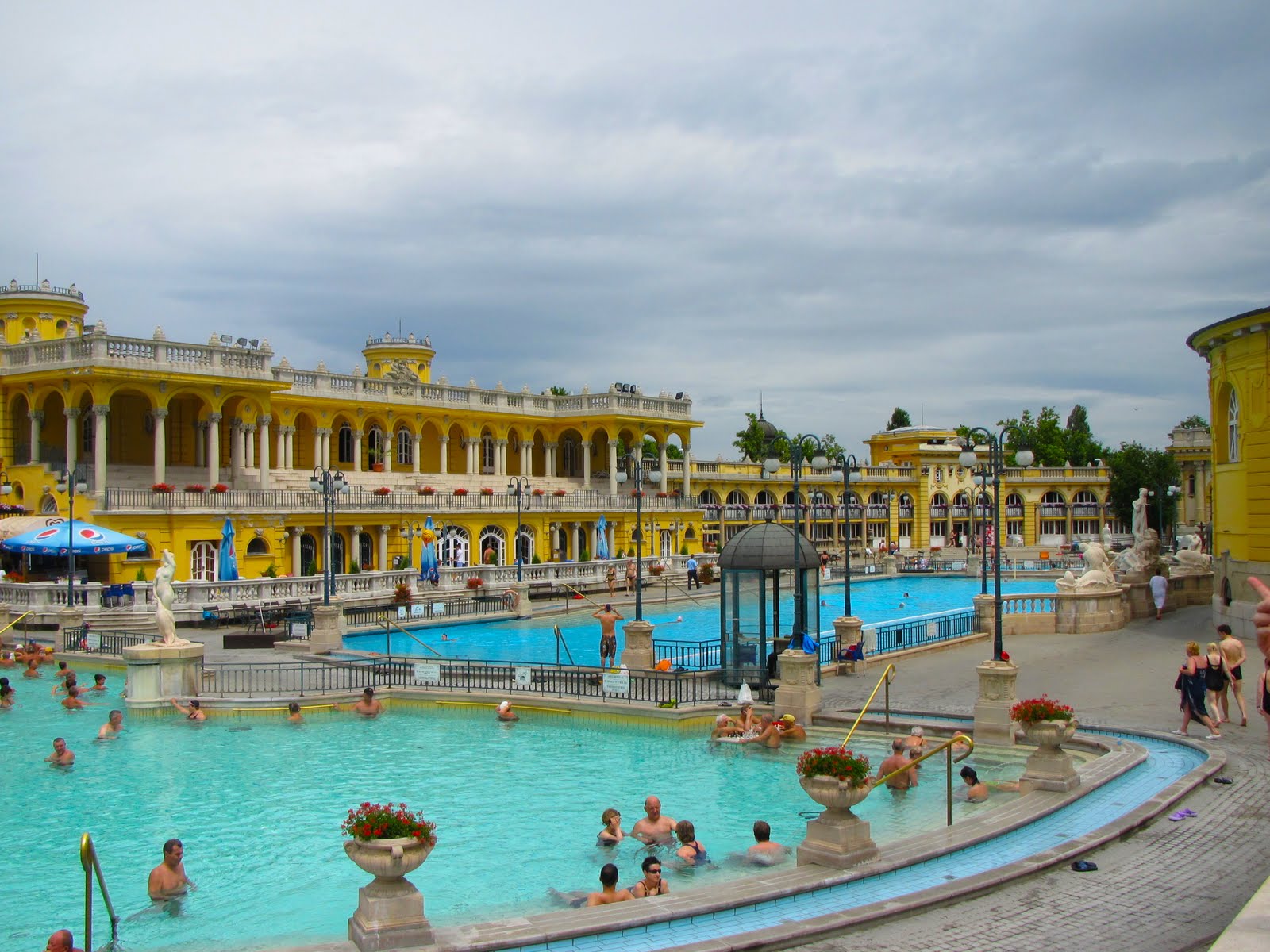
Of the 15 public thermal baths in the city, we decided to "bathe" at the Széchenyi baths, the largest in the city as well as the largest spa in Europe. 


Its thermal springs were first discovered in 1879, and the stunning architectural structure that holds the bath house was built in 1913.


Known for its vast bath complex, there are three outdoor pools open year round.  Two of them are hot soaking pools with temperatures of 30º and 38º (86º F and 100.4º)


and one is a swimming pool with a swimming tube--a whirling corridor that is extremely popular.


Budapest's thermal waters were first enjoyed by the Romans as early as the second century, but it was later during the Turkish occupation of the city in the 16th century that the bath culture began to flourish.


Indoors we found saunas and 15 pools of varying temperatures


from very warm to very cold


where we enjoyed taking the baths with the locals. In addition to the relaxation of spending a day in the bath, the minerals in the waters are very therapeutic and felt marvelous after all the walking we had been doing to cover all points of this beautiful city.


And if you get tired of all that soaking, you just might enjoy an afternoon game of chess like these local friends were doing. 

Checkmate!